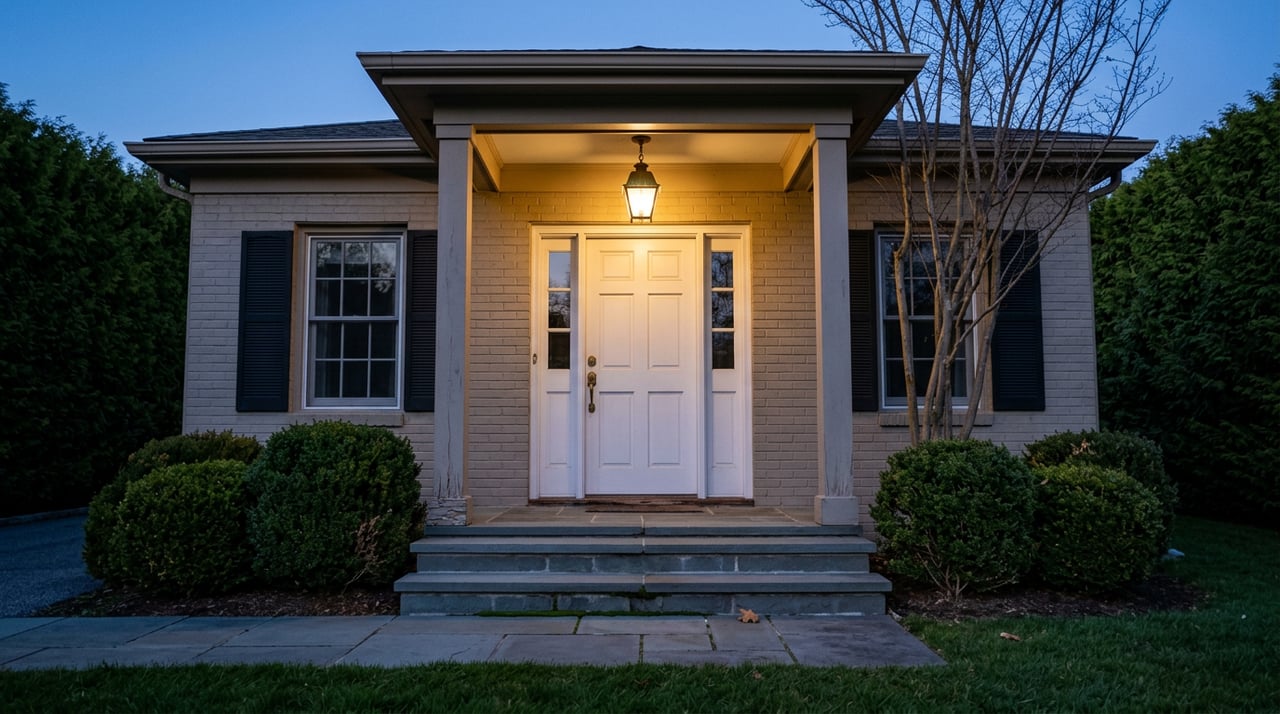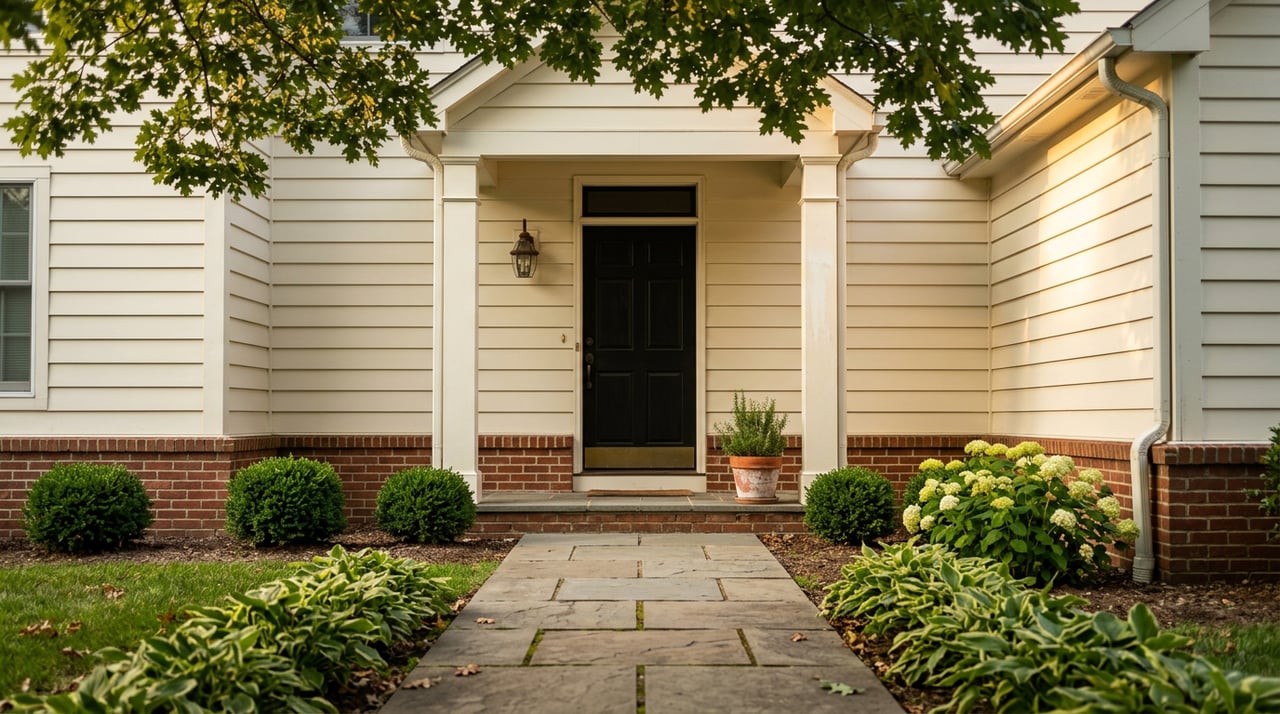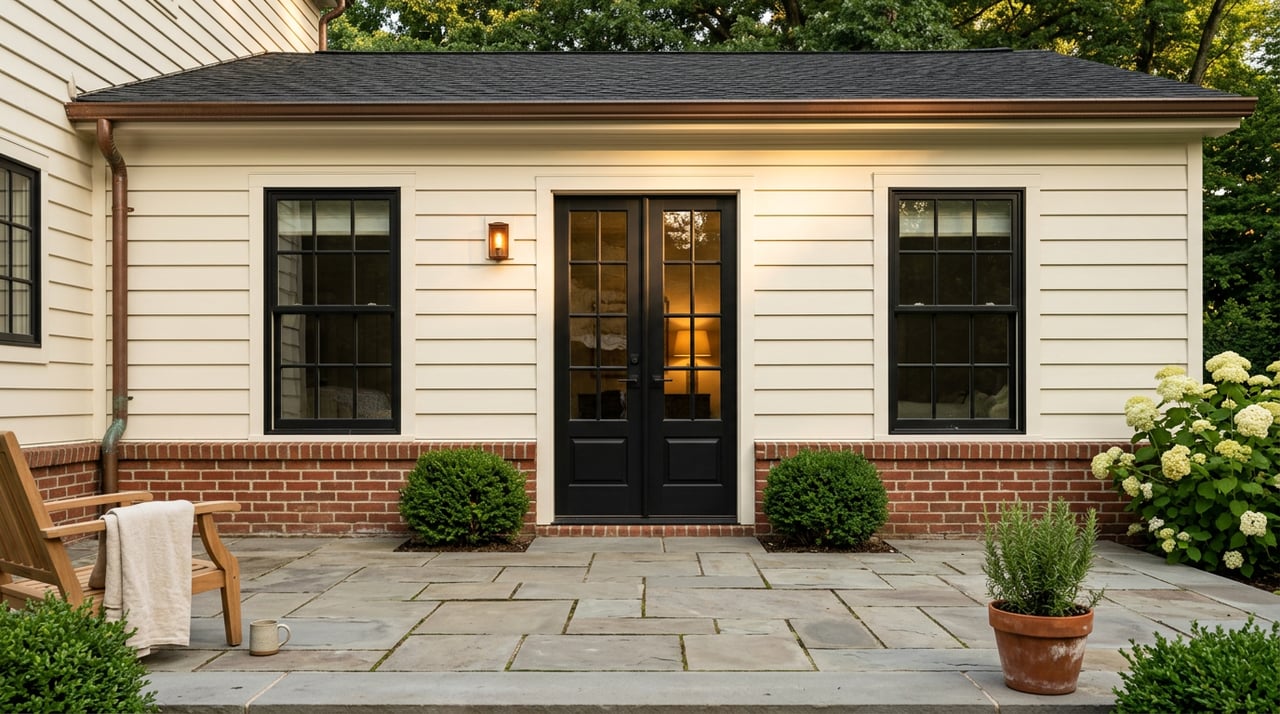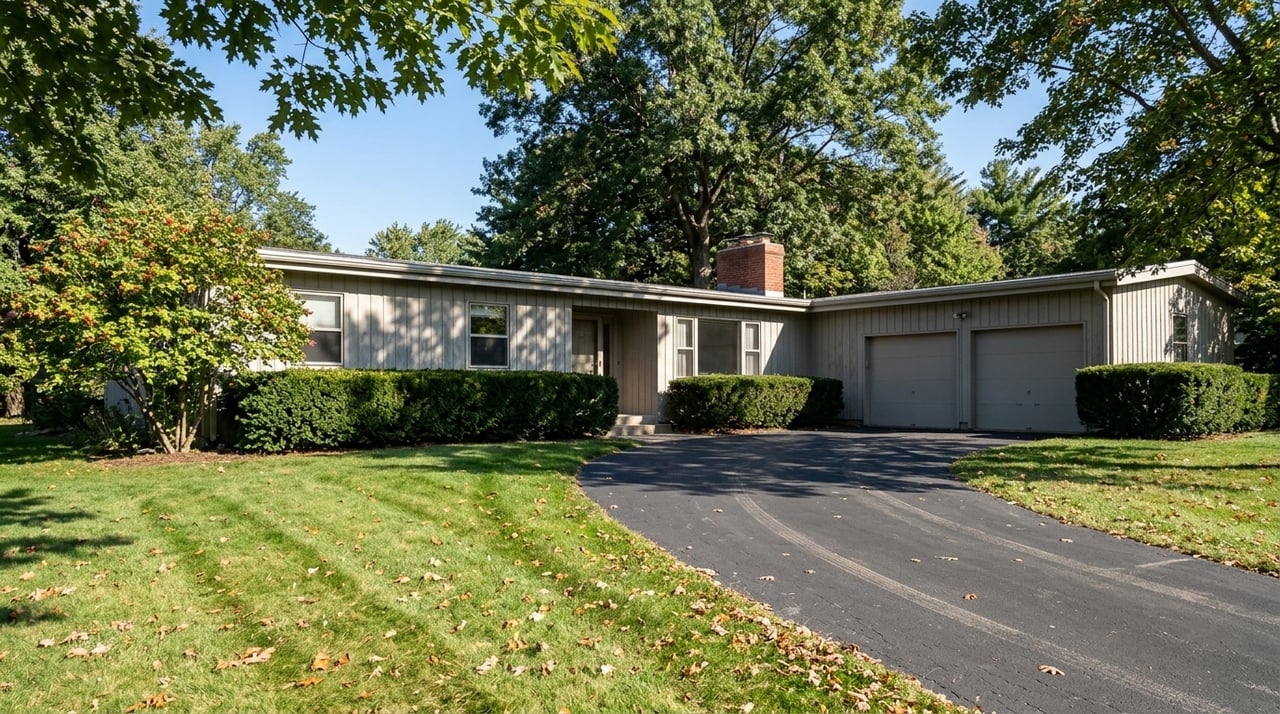
You're three days from your inspection deadline on a colonial in Rosendale Estates, and the report lands with a section flagged in red: aluminum branch wiring. Your first instinct is to wonder what's wrong with this particular house. Did the seller cut corners? Did a previous owner do something sketchy in the basement?
Neither. What you're looking at isn't a defect in this house. It's a date stamp. And in Niskayuna's older, most sought-after neighborhoods, that date stamp shows up in nearly every inspection report you'll read this year, because the houses themselves were nearly all built inside the same eight-year window.
One Neighborhood, One Decade
Niskayuna's reputation rests heavily on its established subdivisions: Hawthorne Hills, Rosendale Estates, Avon Crest, Craneville, Orchard Park, and Windsor Estates near the old Knolls Atomic Power Laboratory site. These aren't loose clusters that grew up over generations. They were built, largely, to house the engineers and scientists filling GE's research and development operations after World War II, and the construction dates cluster tightly as a result.
Hawthorne Hills is a clean example. A March 1966 advertisement in the Schenectady Gazette invited buyers to the construction site along Ruffner Road, promising a "fine choice of immediate homes" and the chance to "select a lot and build your Dream Home." The houses that went up there between the late 1950s and late 1960s held their value in a tight band relative to one another for decades. A 2012 Times Union feature on the neighborhood found several houses on the market priced between the $270,000s and $330,000s, roughly 45 years after that ad first ran, which says something about how closely homes from a single construction era track each other in price even as time passes.
That pattern repeats across town. The older single-family stock across Niskayuna, the Cape Cods, ranches, colonials, and bungalows concentrated in what longtime residents call "Olde Niskayuna," typically sells in the $240,000 to $400,000 range. Newer colonials and custom builds, put up from the 1990s onward, sell for $600,000 and up. That isn't a gap driven by lot size or school zone. Both tiers sit inside the same district. It's a gap driven almost entirely by the year a house was framed.
Which means when you shop the lower tier, and most first-time and move-up buyers in Niskayuna do, you're not really comparing houses. You're comparing a decade against itself.
What the Decade Actually Left Behind
Here's the mechanism worth understanding before you write an offer. A handful of building materials and methods were standard practice for a narrow stretch of years, then were abandoned once their problems became clear. If your target house falls into that stretch, the issue isn't optional. It's structural to the era.
| Construction era | What commonly shows up on inspection |
|---|---|
| Before roughly 1940 | Knob-and-tube wiring, no grounding |
| Any home built before 1970 | Galvanized steel plumbing, no GFCI protection at outlets |
| 1965 to 1973 | Aluminum branch circuit wiring |
| Any home once heated by oil before a gas conversion | Abandoned underground fuel storage tank |
Aluminum wiring is the one that catches people off guard most often, because the 1965-1973 window lines up almost exactly with the Hawthorne Hills construction years and much of the Rosendale Estates buildout. Copper prices spiked during that period, and builders switched to aluminum branch wiring as a cost measure. Properly maintained aluminum wiring is generally acceptable, but it tends to become defective faster than copper, and it's the kind of finding that shows up on almost every house from that specific stretch, not just the one you're bidding on.
Jay Wynn, a NYS-licensed home inspector who works Niskayuna regularly, has flagged the same pattern across the town's pre-1970 stock: outdated wiring, older galvanized plumbing, and foundations that show age or moisture, particularly on properties near the Mohawk River. None of that is a red flag about any specific seller. It's what the era produced.
What New York Law Actually Makes a Seller Tell You
New York operates on a caveat emptor standard, which means the burden sits with the buyer to investigate, not with the seller to volunteer. The state does require a Property Condition Disclosure Statement, and it does ask direct questions relevant to a 1960s Niskayuna house: whether petroleum products have ever spilled or leaked on the property, whether a fuel storage tank on the property is still in use or has ever leaked, whether a radon test has been done, and whether lead plumbing is present.
The catch is that the form is based entirely on what the seller actually knows and is willing to certify. It isn't a warranty, and it isn't a substitute for your own inspection. If a seller simply doesn't complete it, the consequence isn't that you get the disclosure anyway. You get a $500 credit at closing instead. Given what an aluminum wiring remediation or an oil tank decommissioning can cost, a $500 credit is not a meaningful substitute for knowing what you're buying. The inspection, not the form, is doing the real work here.
The Oil Tank Is the One With Teeth
Of everything on that table, a buried oil tank is the finding most likely to actually stop your closing rather than just adjust your budget. It isn't illegal to own or sell a house with an unremediated underground tank in New York. But in practice, mortgage lenders routinely decline to fund a purchase until the tank is properly decommissioned or removed, and a growing number of insurers won't bind a homeowner's policy on a property with a known buried tank either. If your inspector spots one, or spots evidence that one used to be there, that's the item to resolve before you get anywhere near the closing table, not after.
The Market Just Handed Buyers Some Room
Here's where the timing actually works in your favor right now. A year ago, Niskayuna listings were moving in roughly six to eight days on average, which meant sellers had little reason to negotiate around inspection findings. Waive it or lose the house.
That's changed. As of April 2026, homes across all types in Niskayuna were averaging 16 days on market, up from 6 days over the same stretch the year before, with the median sale price sitting near $380,000, down about 10.6 percent year over year. A separate tracker logged May 2026 activity a bit differently, with a median closer to $459,000 and 18 days on market, up from 8. The exact figures shift depending on the month and which homes get counted, but the direction is consistent across both: houses are sitting roughly twice as long as they did a year ago.
That's not a market in freefall. It's a market where sellers no longer hold all the leverage on inspection day. If your Hawthorne Hills or Craneville inspection comes back with the aluminum wiring or the oil tank you should have expected given the build year, this is a market where asking for a credit, a price adjustment, or seller-funded remediation is a reasonable ask, not a house-losing one.
Budgeting Before You Bid
The practical move is to stop treating these findings as surprises and start treating them as line items you already know are coming if you're shopping the pre-1970 tier. Before you write an offer on a house built in that window, ask your agent what year the subdivision went up, and price in an electrical evaluation, a plumbing check, and a records search for any prior fuel tank on the parcel as part of your due diligence budget, not as an emergency after the fact.
A Few Questions Worth Asking Directly
Does a buried oil tank automatically kill the deal? No. It's not illegal to close on a property with one still in the ground. But expect your lender and your insurer to want documentation that it's been properly decommissioned before they'll move forward, so plan for that step early rather than discovering it during underwriting.
Is aluminum or knob-and-tube wiring dangerous just because it's there? Not inherently, if it's been maintained and hasn't been altered improperly. But it's the kind of item insurers price differently, so get a number before you assume it's a non-issue.
If the seller didn't disclose something, do I have recourse? The Property Condition Disclosure Statement only reflects what a seller certifies knowing at the time. If they skip it, you're entitled to a $500 credit, not a guarantee of a clean house. Your inspection remains the tool that actually protects you.
If you're weighing a house in one of Niskayuna's established neighborhoods and want to know what its construction year is likely to hand you before you're locked into a deadline, Karl Philip Meehan and the CWK Team can walk the inspection math with you against the current market, whether you're buying your first home in Rosendale Estates or deciding it's time to sell the one you've been in since the last building boom.