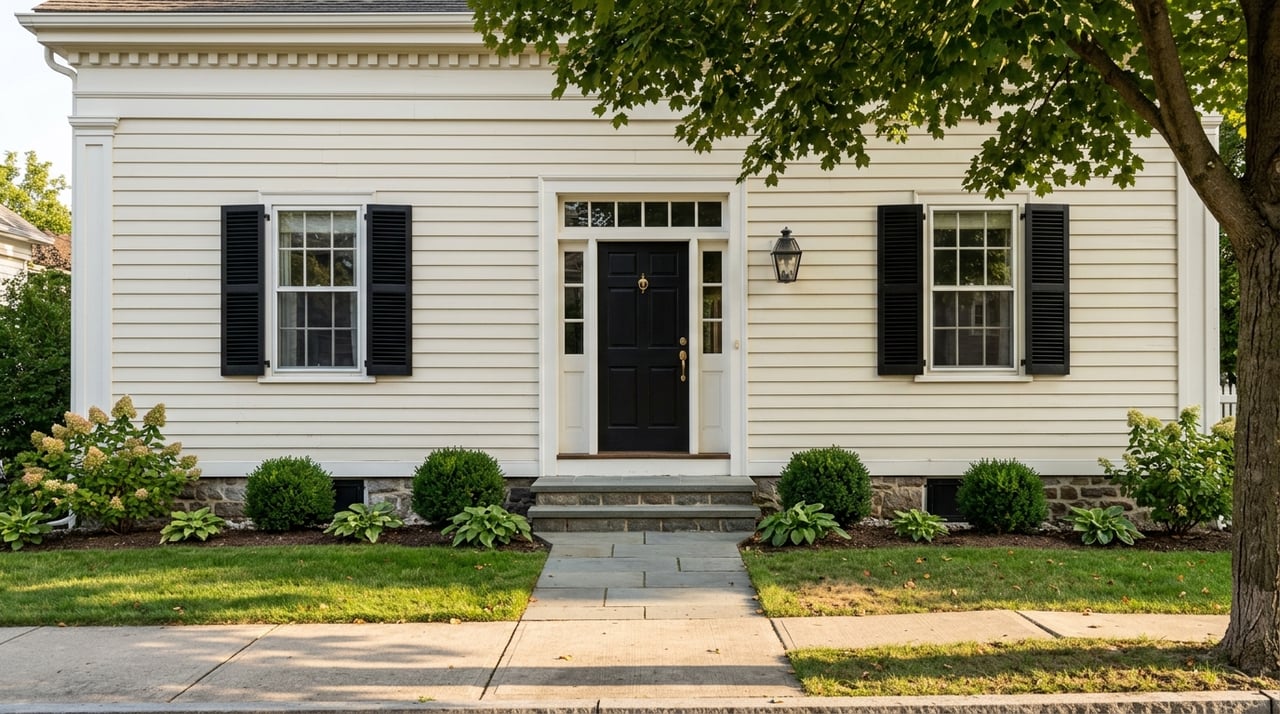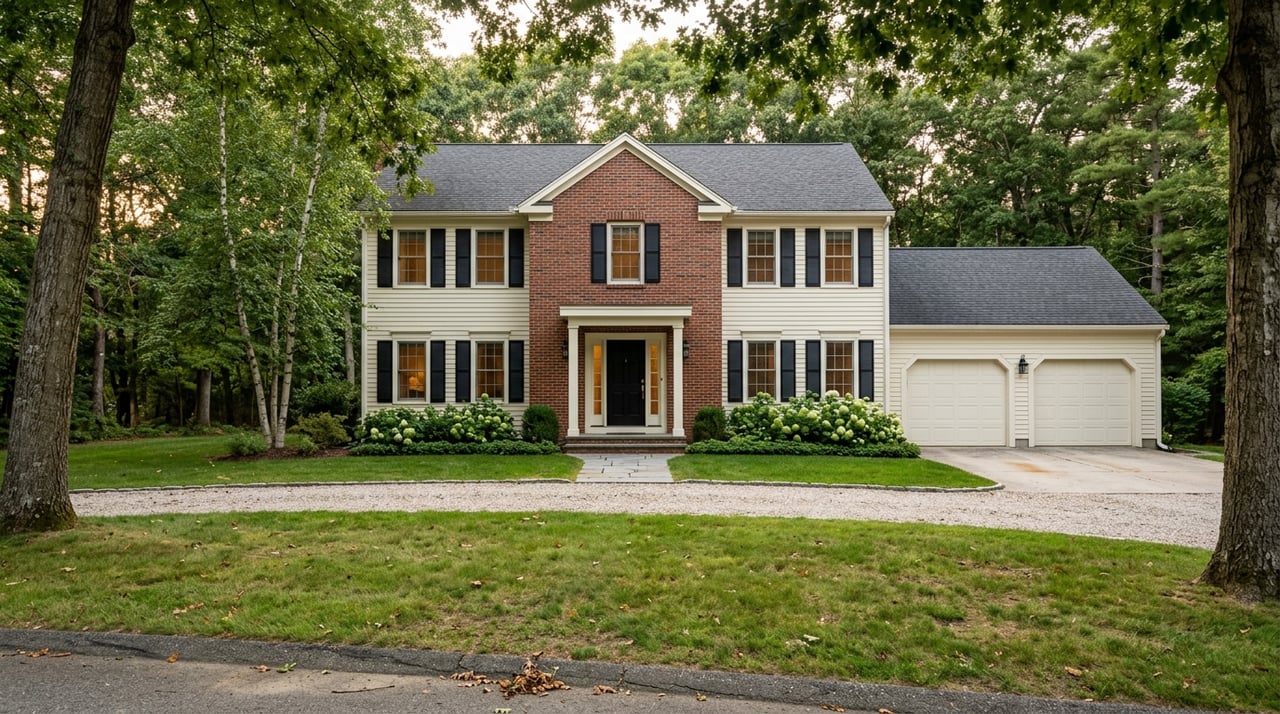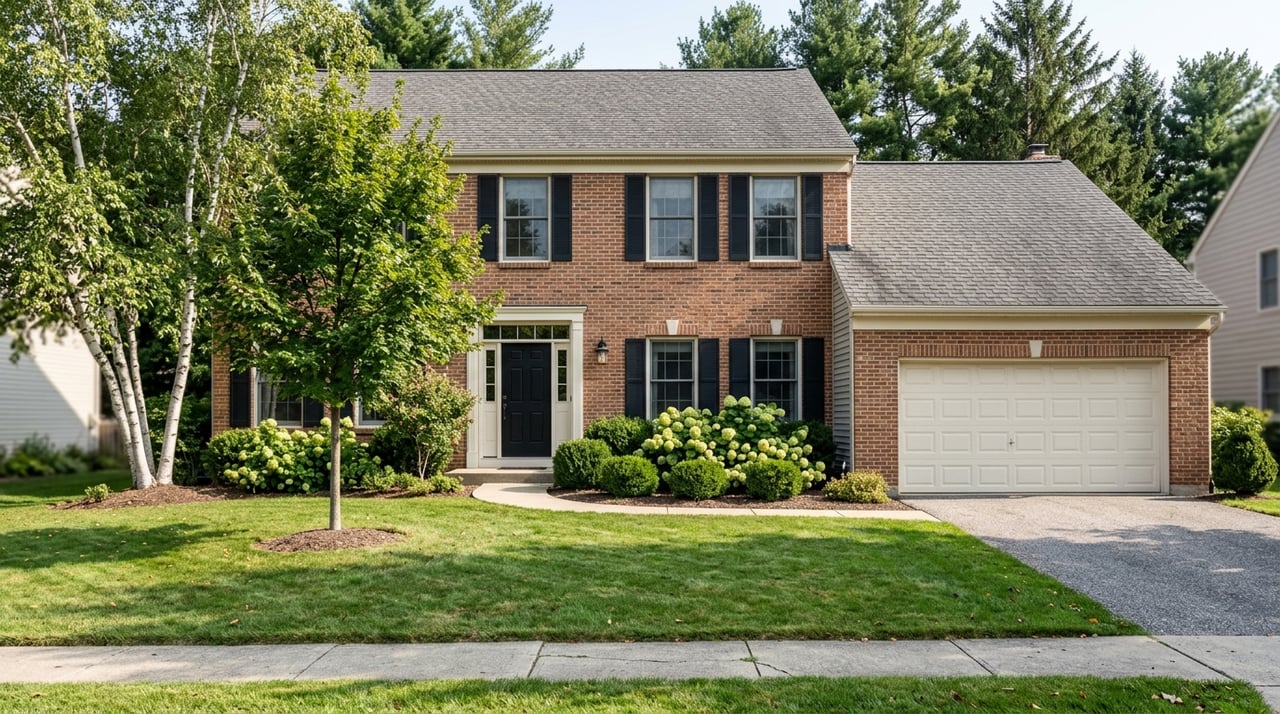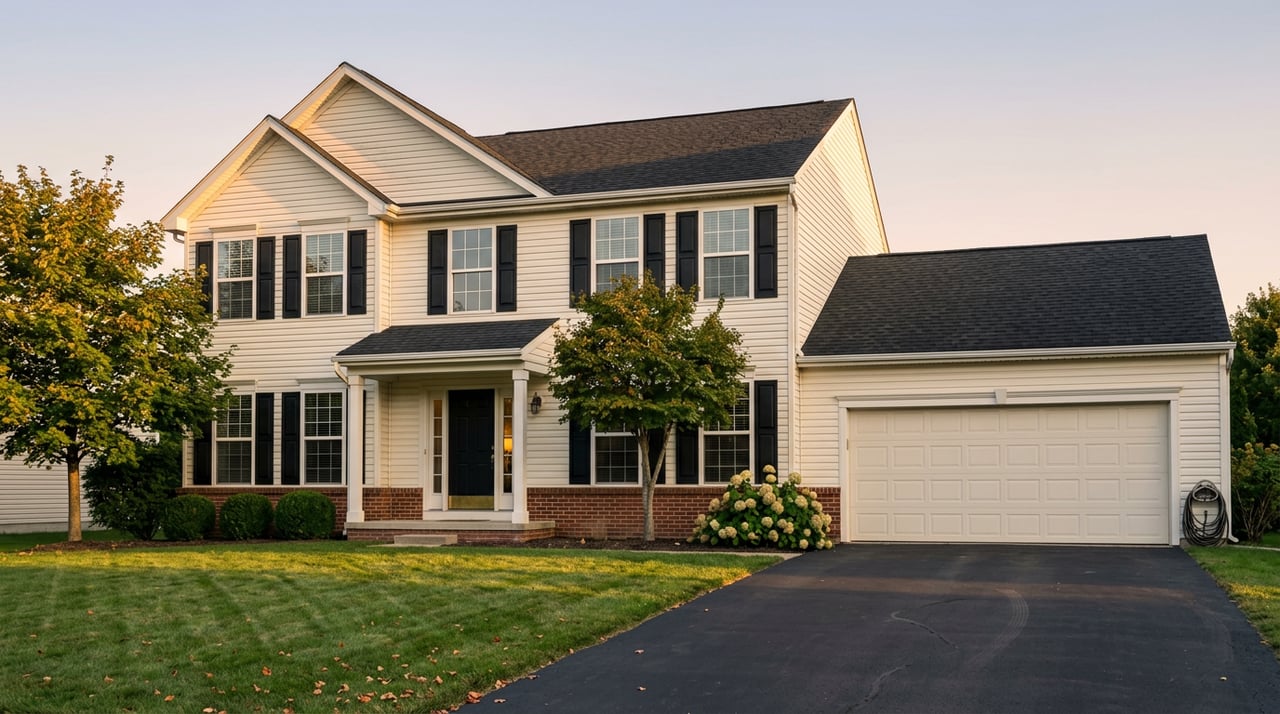
A buyer walks into Clifton Park with a number in their head. They saw it on a portal, probably somewhere between $460,000 and $500,000, and they built the rest of their search around it. Then they start touring. The 1990s colonial off Moe Road with the finished basement lands under contract in six days, three offers above ask. The new build at Edgewood Estates on a wooded acre lists at $712,900, and it has been sitting for weeks. Same town. Same school district. Same zip code. The number in their head does not explain what they are seeing.
That is because the Clifton Park median is not one market. It is the arithmetic middle of two markets that behave almost nothing alike, and understanding which one your budget shops in matters more than the median itself.
Two markets under one median
The resale tier is where the median lives. In March 2026, Clifton Park's median sale price was around $495,000, and homes were going under contract in a median of seven days, compared with 40 days the year prior. That is not a soft market compressing. That is a scarcity market where anything reasonably priced in the resale stock is spoken for before the weekend is out.
The new-construction tier operates on a different clock and a different price band. Active new-build listings across Edgewood Estates, Saddlebrook Ridge, Waite Meadows by Belmonte Builders, and Michaels Group's Crescent Woods are pricing between roughly $579,000 and $756,000, with wooded one-acre homesites at the top of that range. These homes are not selling in a week. Some carry days-on-market counts in the 40s, 60s, and 80s. Movoto's July 2026 snapshot pegged the median list price in Clifton Park at $599,000 with a median of 17 days on market, which is what happens when active new construction pulls the list-side arithmetic upward while the resale tier keeps clearing faster than it can be measured.
Here is what the two tiers actually look like side by side:
| Tier | Typical price band | Median DOM | What you are buying |
|---|---|---|---|
| Resale, existing stock | ~$450K to $525K | 7 days (March 2026) | 1980s to early 2000s colonial, split-level, or ranch; established lot; Shenendehowa access |
| Resale, upper end | $600K to $1M+ | Varies | Larger custom homes, updated kitchens, occasional acreage |
| New construction | $579K to $756K+ | Weeks to months | Builder warranty, current-code insulation, primary-on-first-floor floor plans, one-acre wooded homesites at the top of the range |
The reader who came in at $495,000 is shopping the first row. They are not shopping the third row, and no amount of touring new-build models will change that math. Recognizing the boundary is the first move.
Why the resale side is clearing in a week
The seven-day median is not a marketing line. It is the mechanical result of three things happening at once.
First, inventory in the resale tier is thin. Redfin recorded 14 homes sold in Clifton Park in March 2026, down from 21 the prior March. Fewer transactions in a school district this well-known creates the queue behavior buyers are running into.
Second, the tax structure quietly does a lot of work. Per the New York State Comptroller's figures cited in the town's 2026 budget, Clifton Park ranks 911 out of 931 towns in New York for municipal property taxes, and Saratoga County itself carries the lowest property tax and sales tax rates in the state. The 2026 town budget maintains no property tax at all on the General Fund. For a household running affordability math against Latham, Niskayuna, or Bethlehem, that column changes the answer.
Third, Exit 9 keeps upgrading the daily-life offering that makes the tax math worth showing up for. Clifton Park Center is in the middle of an ownership-driven revitalization, with Five Below already open at 22 Clifton Country Road, plus J.Crew Factory, Wetzel's Pretzels, and Herbie's Burgers filling in the tenant mix. A block away at 4 Fire Road, the old gas station and strip mall came down, and a rebuilt USA Gas convenience store expanding from roughly 500 square feet to about 4,350, alongside a new full-service Pioneer Bank branch with drive-thru, are set to open in 2026 under a $3.9 million construction loan. The Town Center Park, a 37-acre parcel the town bought for $1.1 million after a 2017 referendum, added a paved mixed-use trail and open green space at the retail core. The Clifton Country Road walkability project is extending sidewalk on both sides of the road, funded through the Transportation Alternatives Program.
None of that is a single amenity. It is the same corridor getting denser, more walkable, and better-served year over year, which the town's own 2026 budget document credits with expanding the tax base and holding school tax increases down. When resale buyers ask why the seven-day clock is real, that is the answer.
What the new-build premium actually pays for
The $100,000 to $200,000 gap between resale and new construction is not a mistake in the market. It is priced against a specific set of things resale cannot deliver.
Belmonte Builders' Waite Meadows off Route 146 is a 34-home community with a boulevard entry, two cul-de-sacs, walking trail, and three estate lots. Michaels Group's Crescent Woods is built to current energy standards with a neighborhood walking trail linked to the broader system. Edgewood Estates and Saddlebrook Ridge active listings include one-acre wooded homesites, first-floor primary suites, two-story great rooms, and daylight basements ready to finish. A 3-bed, 2-bath 2,278-square-foot Edgewood floor plan lists at $712,900. A 3-bed, 3-bath 2,283-square-foot home at 649 Tanner Road is active at $720,900. A 4-bed, 3-bath 2,545-square-foot new build at 14 Edgewood Drive lists at $685,900.
What the premium is really buying is threefold: build-out predictability on a fixed timeline, warranty coverage on systems and envelope that resale buyers eat themselves, and land inventory the resale market simply does not have because most resale lots were platted at half an acre or less in earlier decades. If those three matter, the premium is rational. If they do not, the premium is money the resale tier would prefer you spend on a bidding war instead.
Where the two markets change how you write the offer
The friction most buyers get wrong is treating both tiers as if they need the same offer strategy.
On the resale side, seven-day DOM means the diligence has to happen before the offer, not after. In practice, that looks like a pre-listing walkthrough scheduled the same day the home hits the MLS, a fully underwritten pre-approval rather than a pre-qualification letter, and inspection contingency language that is tight enough to stay competitive without being reckless. New York does not require the seller to fix anything found in inspection, so the leverage inspection gives you is walk-away leverage, not repair leverage. The Property Condition Disclosure Statement matters, but in a market where the seller is choosing among multiple offers on day three, the buyer who understands what the disclosure actually obligates the seller to do wins the shorter conversation.
On the new-build side, the friction is different and slower. Construction timelines slip. Base-price sheets and final-price sheets are not the same document once options are selected. Builder contracts default to language that favors the builder on inspection access, punch lists, and closing timeline flexibility. A buyer coming from the resale tier expecting a 30-day close is going to be surprised at least once. The upside is that new-build negotiations have more room on incentives, closing cost credits, and design center allowances than resale negotiations have on price.
Where buyers get burned is running the resale playbook on new construction, or the new-construction playbook on resale. Different clock. Different leverage. Different contract.
A few questions this raises
If the median is $495K, why are so many active listings priced above $600K? Because active-listing medians include new construction that sits, while sold medians reflect resale that clears fast. The Movoto July 2026 list-side median of $599,000 and Redfin's March 2026 sold median of $495,000 are both accurate. They are measuring different things.
Is now a good time to sell in Clifton Park? Sold prices in the resale tier were down about 10.1% year over year in March 2026 on a median basis, and down 8.1% on price per square foot, while days on market compressed from 40 to 7. Translated: fewer transactions, faster ones, at prices slightly below last year's peak. For a seller with realistic pricing and a clean listing, the speed is the story.
Does the Exit 9 build-out change what suburbs Clifton Park competes with? It changes the comparison set. A buyer weighing Clifton Park against a longer commute to Malta or a higher-tax address elsewhere in the Capital Region is now comparing against a town center that keeps adding retail, restaurants, and walkable infrastructure, on top of a tax bill that Saratoga County keeps at the low end statewide.
If you are trying to figure out which of the two Clifton Park markets your number actually shops in, or how to write an offer that survives contact with either one, CWK Team works through the math with buyers and sellers across the Capital Region every week. Get a Free Home Valuation to start with a real number instead of a portal estimate.